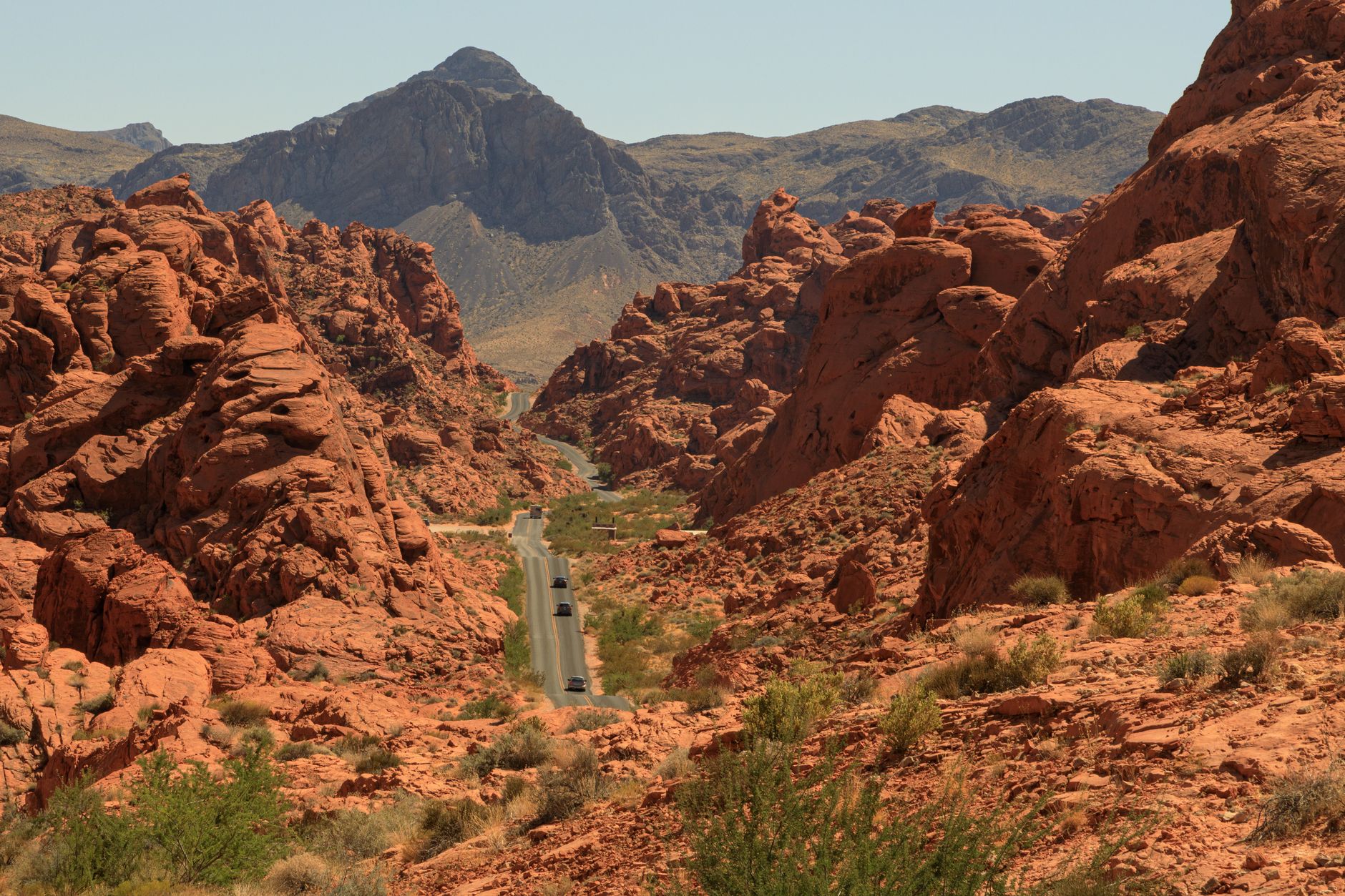
The route and timing
Drive NV-160 west from Vegas through Pahrump to Death Valley Junction, then CA-190 into the park — 130 miles, roughly 2.5 hours to Furnace Creek. Do this trip October through April only. May through September, Badwater regularly hits 115 to 125 degrees and rangers actively discourage day-trippers. Fill up in Pahrump; gas at Furnace Creek runs about $2 a gallon over Vegas prices.
A second approach worth knowing: US-95 north to Beatty, then NV-374 through the ghost town of Rhyolite into the park at Hell's Gate — about 115 miles and 2 hours 15 minutes from Vegas, marginally faster than the Pahrump route if traffic on NV-160 is heavy. Both roads are paved and open year-round, though NV-374 closes briefly after flash floods, which hit the region a handful of times each summer. Whichever way you go, check the National Park Service road-conditions page before you leave; washouts on the valley floor roads are common even when Furnace Creek itself is dry. There is no cell reception once you cross the state line until you reach Stovepipe Wells.
The stops that matter
Zabriskie Point at sunrise if you can swing an overnight in Pahrump; otherwise hit it late afternoon. Badwater Basin at 282 feet below sea level — walk 15 minutes out onto the salt flats. Artist's Palette, a 9-mile scenic loop of mineral-stained hills, best in soft light. Mesquite Flat Sand Dunes at sunset, a 10-minute walk from the road. Skip Scotty's Castle (closed for repairs) and Dante's View unless you have extra hours.
Beyond the big four, two easy add-ons repay the extra 30 minutes: Devil's Golf Course, a mile past Badwater, where jagged salt crystals make walking treacherous in flip-flops, and Golden Canyon, a 1-mile round-trip out-and-back trailhead across from Zabriskie Point that gets you into the badlands without a full hike. Twenty Mule Team Canyon, a 2.7-mile unpaved loop off CA-190, is passable in any rental sedan at under 15 mph and shows the same borax-era terrain without the crowds at Zabriskie. Skip Ubehebe Crater unless you are staying two days — it is 55 minutes each way from Furnace Creek, too far to fit into a single day loop with the other four stops.
Where to stay the night before you go
Starting from the Strip costs you 20 to 25 minutes fighting I-15 and Tropicana Avenue traffic before you even reach NV-160, so a westside base pays off if you want first light at Zabriskie. Red Rock Casino Resort and Spa, out on West Charleston Boulevard, sits closest to the Pahrump turnoff and runs $90 to $160 a night depending on the season. Durango Casino & Resort, newer and further south on Durango Drive, is in the same $100-to-$170 band and has a 24-hour café for a pre-dawn breakfast before the drive. South Point Hotel Casino and Spa, at the far south end of Las Vegas Boulevard near the 215 Beltway, works well if you are coming from the airport the night before and want quick access to NV-160 via Blue Diamond Road.
None of these three are resort-fee-free, so budget an extra $35 to $45 a night on top of the room rate. Book at least two to three weeks ahead for winter weekends, when Vegas hotel occupancy climbs and Death Valley's cooler months draw the same crowd. For lodging directly in Pahrump or inside the park at Furnace Creek and Stovepipe Wells, book through the individual properties' own sites rather than a general search, since availability during the cooler months fills first. Whichever of the three Las Vegas westside options you pick, the choice comes down to how early you want to leave: Red Rock Casino Resort and Spa shaves the most minutes off a Zabriskie Point sunrise start, and it is the one to book first.
Food, water, and fuel logistics
Furnace Creek is the only reliable food and fuel stop inside the park, and prices reflect the monopoly: expect $6 to $8 gallon gas and $18 to $28 entrees at The Ranch at Death Valley's restaurants. Stovepipe Wells Village Hotel, 25 minutes further west, has a smaller restaurant and general store with similar pricing, useful if you are approaching from the Beatty route. Neither location takes reservations for casual dining, and both can run out of hot food by mid-afternoon on busy holiday weekends, so plan your one sit-down meal for lunch rather than late afternoon.
Pack more water than you think you need: the park service recommends one gallon per person per day even in cooler months, on top of the 4 liters already mentioned for shorter stops. There is no potable water at Badwater Basin, Zabriskie Point, or Artist's Palette — only at Furnace Creek and Stovepipe Wells — so fill bottles before you leave either stop. Bring a cooler with ice from Pahrump; a warm car in Death Valley in April can still hit 90 degrees by noon, enough to spoil sandwiches left on a seat. If you are driving the Beatty route, top off in Beatty itself, since Rhyolite has no services.
Heat and safety in the park
Death Valley holds the record for the hottest air temperature ever reliably recorded on Earth — 134 degrees at Furnace Creek in July 1913 — and even in the shoulder months of March and October, afternoon highs at Badwater regularly reach 95 to 100 degrees. Car trouble is the most common reason for ranger call-outs; check your tires and coolant before leaving Pahrump, since a breakdown on the valley floor can mean an hour-plus wait for help with no shade and no cell signal. Carry a paper map as backup, since GPS routing has sent drivers down unmaintained backcountry roads that require high-clearance or four-wheel drive, stranding standard rental sedans.
If you are hiking beyond the 15-minute Badwater walk, tell someone your planned route and turnaround time, and avoid any trail below sea level between May and September entirely. Golden Canyon and the Mesquite Flat dunes are both flat enough to manage in under an hour, but even these should be done in early morning or right before sunset from April onward. Flash flooding is a real and separate risk from heat: a storm over the surrounding mountains can send water down a wash miles from where rain actually fell, so never park or walk in a dry wash bed if clouds are visible over the Panamint or Amargosa ranges. Rangers close roads within minutes of a flood warning, which can strand day-trippers overnight with no lodging booked.
Getting the best light and dodging the crowds
Zabriskie Point gets the heaviest crowds of any stop in the park, with tour buses from Vegas arriving between 7 and 9am specifically for sunrise; if you cannot get there before dawn, the light 90 minutes before sunset is nearly as good with a fraction of the people. Artist's Palette is at its most saturated in the hour after sunrise or before sunset, when low-angle light brings out the pink and green mineral streaks; midday sun flattens the colors to a dull grey-brown, so do not bother stopping there at noon.
Badwater Basin has no shade and gets its harshest glare between 11am and 3pm, so mid-morning or late afternoon both work better for the salt-flat photos everyone is chasing. Mesquite Flat Sand Dunes are busiest at sunset, when the same tour buses that hit Zabriskie at dawn regroup here for the day's last stop; arrive by 4:30pm in winter to find your own patch of untouched sand before footprints cover it. If photography is the main goal of the trip, structure the day around Zabriskie at sunrise and the dunes at sunset, and treat Badwater and Artist's Palette as the flexible middle.
Good to know
Questions, answered
How long do I need in Death Valley?
A full day covers the four main stops if you leave Vegas by 7am and drive back after sunset. Two days lets you add Dante's View and Ubehebe Crater.
Is cell service available in the park?
Only near Furnace Creek and Stovepipe Wells. Download offline maps before you leave Pahrump.
What should I bring?
4 liters of water per person, snacks, sunscreen, a hat, and a full tank of gas. There is no reliable food outside Furnace Creek.
Can I visit Death Valley in July?
You can, but limit yourself to short stops from an air-conditioned car. Do not attempt hikes above Badwater in summer.
Do I need to buy the park pass in advance?
No — pay the $30 per vehicle fee at the entrance station or self-pay kiosk if unstaffed, and keep the receipt visible on your dashboard; it covers 7 days. An annual Death Valley pass is $55 and pays for itself on a second visit within the year, and the $80 America the Beautiful pass covers this park plus every other federal site nationwide.
Is Death Valley worth doing from Reno instead of Las Vegas?
Not as a day trip — Reno to Furnace Creek is about 400 miles and 7 hours one-way via US-95, closer to a two- or three-day trip with an overnight in Beatty or Pahrump. Las Vegas, at 2.5 hours, is the only realistic single-day base in Nevada.
Doing good is the business: every booking through Stay Nevada funds one verified tonne of carbon removal — same room, same price, no markup.
Search stays